
Healing Trauma to Lead Others Better
Mar 24, 2026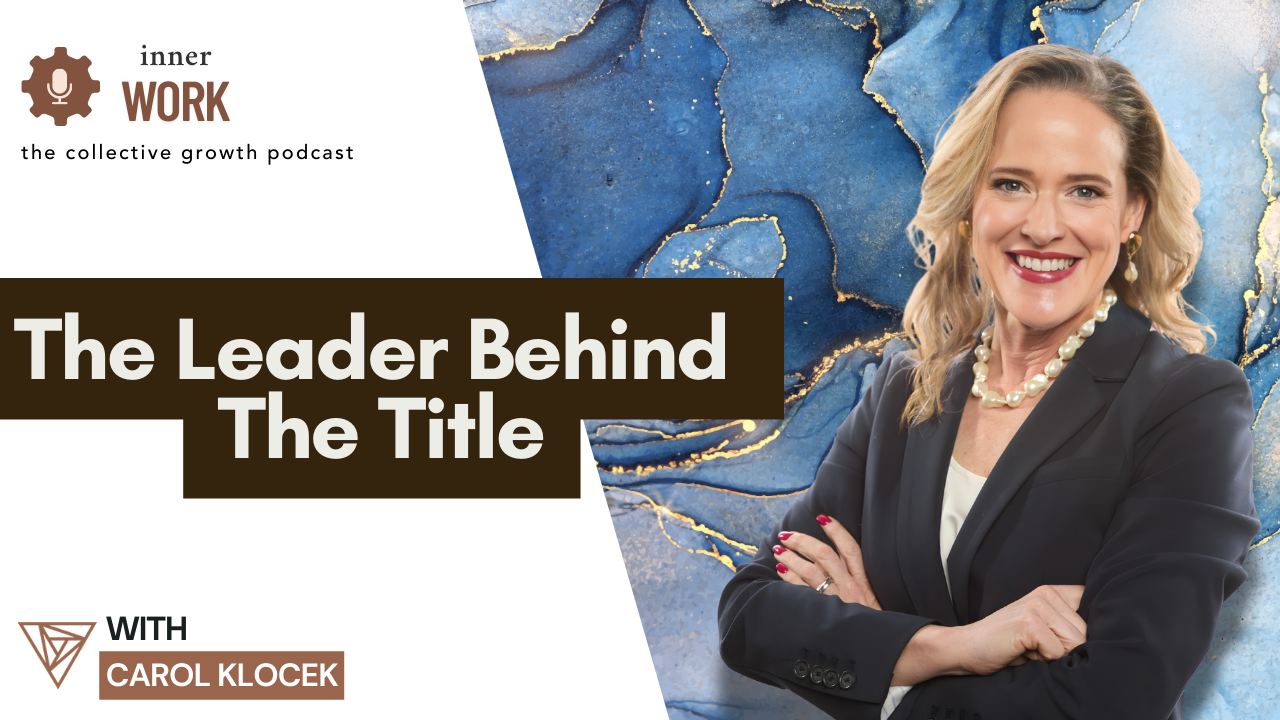
Leadership is often framed around strategy, productivity, and results.
But the most meaningful shifts in leadership rarely begin with tactics.
They begin with the work leaders do within themselves.
In this episode of Inner Work, MaryAnn Means-Dufrene speaks with Carol Klocek, CEO of the Center for Transforming Lives, about the hidden work that shapes effective leadership—healing from trauma, developing self-awareness, and creating psychological safety for others.
Carol’s story is both deeply personal and deeply relevant for leaders navigating pressure, responsibility, and growth.
The Disruption: When survival responsibilities shape leadership early
Carol experienced poverty and trauma growing up, which meant taking on responsibility at a very young age.
By the time she was 13, she had her first paycheck. By college, she was supervising more than 120 employees in a dining hall.
Leadership came early.
But like many high performers who grow through survival and responsibility, Carol’s early leadership style centered on execution and productivity.
“I was incredibly task-focused,” she recalls.
What she didn’t realize at the time was how much unresolved trauma she carried with her into leadership roles.
That realization would take years.
Early in her career, Carol once shared a difficult family situation with a supervisor. The response stayed with her for decades:
“Don’t ever speak about your family again. You will not be respected.”
Though the advice was meant kindly, the message was clear—vulnerability had no place in leadership.
Like many leaders, Carol learned to keep that part of her story hidden.
The Inner Work: Recognizing how past experiences shape leadership
Years later, as Carol helped guide the Center for Transforming Lives toward becoming a trauma-informed organization, something unexpected happened.
The compassion they extended to participants began turning inward.
Their philosophy was simple but powerful:
Meet every person “in her shoes.”
This meant recognizing that every individual walking through their doors likely carried unseen experiences—hardship, trauma, loss—and deserved dignity, compassion, and care.
But Carol began to see something deeper.
If organizations are expected to operate with empathy and psychological safety, leaders must also do the inner work required to lead that way.
Working with a trauma-informed executive coach became a turning point.
She began noticing how past experiences shaped her reactions, stress levels, and leadership patterns.
One idea in particular reshaped her perspective:
Being resourced.
Leaders who constantly push themselves without rest or boundaries often operate in survival mode. Sustainable leadership requires something different.
Being resourced means intentionally caring for your own physical and emotional well-being.
“You have to come from a place of being resourced,” she explains.
“That’s how you show up fully for others.”
The Rebuild: Leading people first during crisis
Carol’s leadership transformation became especially visible during the early months of COVID.
Like many organizations serving vulnerable communities, the Center for Transforming Lives faced enormous uncertainty.
At one point, the organization was losing $50,000 per week.
The future of the organization—and the people it served—felt fragile.
Instead of focusing solely on survival, Carol made a commitment to her team.
They would get through the crisis together.
More importantly, she wanted every employee to know that their safety, their families, and their well-being mattered.
Her leadership focus shifted dramatically.
The priority became people first.
She checked in with employees personally, ensured they had what they needed, and worked to create stability during a deeply uncertain time.
The result was a stronger sense of trust and connection across the organization.
And it reinforced a leadership truth many executives eventually discover:
Organizations thrive when people feel safe.
What I Know Now: Why leadership growth begins with self-awareness
Many leaders believe leadership development is primarily about skills—strategy, communication, or decision-making.
But Carol’s experience suggests something deeper.
Leadership growth begins with self-awareness.
Trauma, stress, and past experiences don’t disappear when someone becomes a leader. In many cases, they quietly shape how leaders respond to pressure, conflict, and responsibility.
Understanding those patterns creates space for growth.
Instead of reacting from old survival instincts, leaders can begin responding with clarity, curiosity, and compassion.
For Carol, that journey is ongoing.
And that’s the point.
Inner work is never finished.
It’s a continual process of noticing, learning, and choosing how to show up.
🎧 Listen to the full episode now!
FREE Team Conflict Assessment
Need help overcoming your Team’s most frustrating challenges? Click the button below to claim your FREE Team Conflict Assessment.
