
The Leadership Trap High Performers Eventually Face
Mar 10, 2026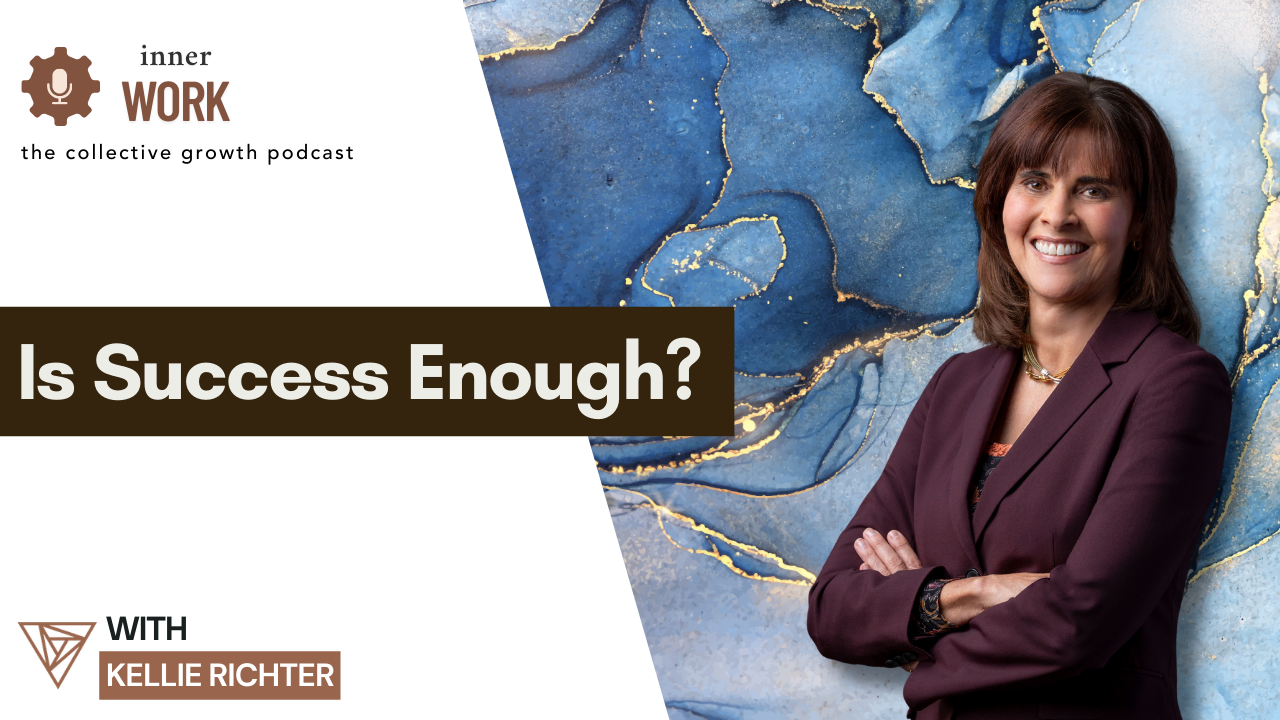
Success has a way of rewarding the very behaviors that eventually exhaust us.
Work harder. Push further. Deliver results. Achieve the next milestone.
For many leaders, this formula works, until it doesn’t.
At some point, high performers discover that the same drive that built their career can quietly become the source of burnout. The pressure to keep achieving, solving, and delivering leaves little room for reflection, meaning, or sustainable energy.
That moment — when success stops feeling sustainable — is where the real leadership development begins.
In this episode of Inner Work, MaryAnn Means-Dufrene sits down with Kellie Richter, Chief Operating Officer of First Command, to explore how leadership evolves when achievement alone is no longer enough.
The Disruption: When achievement stops being sustainable
Early in her career, Kellie Richter defined success the way many leaders do: through achievement.
Raised in a family of educators in the Midwest, hard work and measurable results were the clearest markers of progress. Promotions came. Responsibilities expanded. The path seemed straightforward — work hard, achieve more.
But over time, something became clear.
“Achievement alone is a fast track to burnout.”
Many executives eventually reach a point where their work demands constant energy but offers diminishing meaning. The pressure to perform remains high, yet the internal source of motivation begins to shift.
Kellie describes this transition as moving from achievement to mission impact.
It’s not about working less. It’s about working with purpose.
At First Command, that mission is deeply clear: helping military families pursue financial security while they serve the country.
Connecting leadership to a mission like this changes the emotional equation of work.
Purpose transforms effort into meaning.
The Inner Work: Shifting from performance-driven leadership to purpose-driven leadership
One of the most powerful lessons Kellie shares came from a mentor early in her career.
Many professionals chase the idea of work-life balance, imagining a perfectly even distribution of time between career, family, health, and personal life.
Her mentor challenged that assumption with a simple metaphor.
Imagine your life as a pie chart.
Each slice represents something important: career, family, health, personal growth, spirituality. The mistake many people make is believing every slice must be equal.
In reality, balance isn’t static.
Different seasons of life demand different priorities.
Sometimes family requires more attention. Other times, professional responsibility expands. Sustainable leadership comes from recognizing these shifts rather than fighting them.
“There are going to be times in your life when different slices of that pie need more of your time, effort, and attention.”
Another key shift Kellie describes is moving from telling to coaching.
Early leadership often centers around providing answers; directing teams, solving problems, and delivering results.
But the most effective leaders evolve into coaches.
Coaching requires a different mindset. Instead of focusing on how others see you, the attention shifts toward understanding what others need.
It’s about helping people grow, guiding behavior change, and creating the conditions where teams can do their best work.
This shift, from self-focused performance to other-focused development, is where leadership truly deepens.
The Rebuild: Rebuilding trust through clarity, consistency, and accountability
When Kellie stepped into the role of Chief Operating Officer after years in marketing and brand leadership, she carried an insight that surprised some people:
Operations and brand are inseparable.
Brand is what an organization says it stands for.
Reputation is what people actually experience.
When those two things drift apart, trust breaks.
“Brand is who we say we are. Reputation is what others experience.”
To guide teams around this idea, Kellie often refers to three principles of leadership clarity:
Clarity – Knowing who you are and who you serve
Consistency – Showing up in alignment with that identity over time
Control – Focusing energy on what you can actually influence
These three elements form the foundation of trust.
But consistency doesn’t mean perfection.
Some of the most meaningful leadership moments happen when leaders acknowledge they fell short.
Kellie shares an experience where a conflict with a colleague surfaced publicly in front of their team. Instead of avoiding it, she addressed the situation openly and took responsibility.
That moment of accountability strengthened the relationship rather than weakening it.
Leadership credibility isn’t built by never making mistakes.
It’s built by how leaders repair trust when mistakes happen.
What I Know Now
Through years of leadership, Kellie has learned that trust often grows from something simple: helping people feel seen.
At First Command, the organization measures experience across three groups; clients, employees, and financial advisors.
What the data revealed was surprising.
Respect and value weren’t defined by titles or formality.
They were defined by understanding.
Clients wanted to feel that the organization truly knew them; their circumstances, their goals, and the path they were on toward financial security.
When people feel understood, their nervous system settles. Trust becomes possible. Conversations deepen.
For leaders, the lesson is clear.
Leadership is less about controlling outcomes and more about creating environments where people feel respected, valued, and supported.
And for Kellie, that mission carries particular meaning.
The families First Command serves are military families, people who dedicate their lives to protecting others. Supporting them in building financial security is more than a business objective.
It’s a responsibility.
🎧 Listen to the full episode now!
FREE Team Conflict Assessment
Need help overcoming your Team’s most frustrating challenges? Click the button below to claim your FREE Team Conflict Assessment.
